Class IV laser therapy offers more than just temporary relief. It provides a non-invasive way to calm inflammation, ease pain, and support your body's natural healing process without surgery, injections, or medications.
If you have tried rest and over-the-counter pain relief without lasting results, or if you want to support your recovery without adding more stress to your body, Class IV laser therapy may be worth considering. This gentle treatment works at the cellular level to help tissues repair themselves more efficiently.
What Class IV Laser Therapy Can Do for Your Knee Pain
Class IV laser therapy uses specific wavelengths of light to interact with tissue at the cellular level. Unlike surgical lasers that cut or burn, therapeutic lasers deliver light energy that passes into the tissue without cutting or damaging it.
The light energy is absorbed by cells, which can help reduce inflammation, ease pain, and support tissue repair. This process happens naturally inside your body. The laser simply gives your cells extra energy to work more efficiently.
At ProWellness Family Chiropractic, Class IV laser therapy is used for knee concerns including arthritis and degenerative joint changes, meniscus irritation, ligament strains, tendon problems like runner's knee, and chronic knee pain from overuse or old injury. The treatment is gentle, non-invasive, and works well alongside other care options.
How Class IV Laser Therapy Works: The Science Made Simple
Laser therapy, also called photobiomodulation, works by triggering several beneficial responses when light reaches damaged or inflamed tissue in your knee.
Step One: Light Energy Reaches Your Cells
The laser delivers specific wavelengths of light that penetrate through your skin to reach deeper tissues in your knee joint. Different wavelengths target different depths, so your provider selects the right settings for your condition.
Step Two: Cells Absorb the Energy
When cells absorb this light energy, it supports their natural healing processes. Research on photobiomodulation describes how mitochondria, the power plants inside your cells, use this energy to produce more ATP, the fuel cells need to repair themselves and function properly.
Step Three: Your Body Responds
As cells become more active, several things happen. Inflammation and swelling in the joint and surrounding soft tissue can calm down. Pain sensitivity in irritated nerves may decrease. Blood flow improves, bringing more oxygen and nutrients to the treated area. Studies of the underlying mechanisms also point to enhanced cell repair activity in treated tissue, and tight, overworked muscles around the knee often relax.
The goal is to help your body feel calmer and more capable of healing itself.
What to Expect During Class IV Laser Therapy Sessions
Understanding the process can help you feel more comfortable about starting care.
Your First Visit: The Evaluation
Your first appointment begins with a conversation about your knee pain, medical history, and goals. Your provider will ask when your symptoms started, what makes them better or worse, and how they affect your daily life.
Next comes a physical examination where your provider identifies which areas of your knee need treatment, checks for inflammation or tissue irritation, determines the appropriate laser settings, and explains how laser therapy fits into your overall plan.
Treatment Sessions
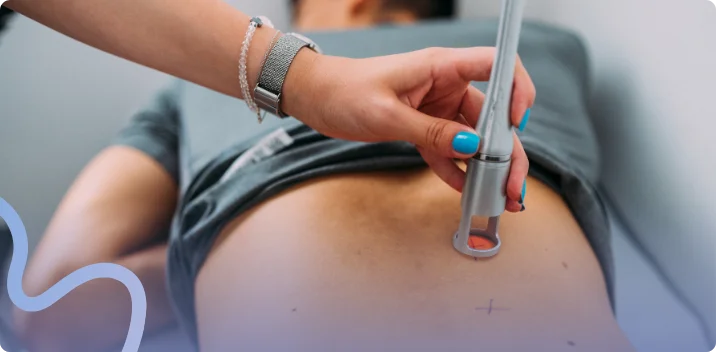
Sessions are quick, comfortable, and painless. You will sit or lie down while your provider moves a handheld laser device over your knee. The laser delivers light energy for several minutes per treatment site.
Most people feel little or nothing during the session. Some notice a gentle warming sensation, but there is no cutting, needles, or downtime. Sessions usually last 10 to 20 minutes depending on how many areas are being treated, and you can return to normal activities immediately.
Many people start with two to three sessions per week. The total number depends on your condition, how long you have had knee pain, and how your body responds. Some notice improvement after a few sessions, while others need several weeks of care for more significant changes.
How Laser Therapy Fits Into Comprehensive Knee Pain Care
If knee problems keep cycling back, laser therapy may be missing the support of complementary treatments. While it can be effective on its own, many people see better results when it is combined with approaches that address movement patterns, strength, and alignment.
At ProWellness Family Chiropractic, your plan may combine Class IV laser therapy with shockwave therapy for stubborn tendon irritation, therapeutic ultrasound and e-stim to ease muscle guarding, and chiropractic adjustments when hip or pelvic alignment is adding stress to the knee. The right approach depends on you, not on a generic checklist.
Who Is a Good Candidate for Class IV Laser Therapy?
Laser therapy may be a good fit if you have chronic knee pain that has not fully responded to other treatments, you want a non-invasive option without medications or injections, you are recovering from a knee injury and want to support healing, or you have inflammation that needs gentle support.
The treatment is considered very safe when applied by trained providers. Rare reactions include temporary soreness or slight redness at the treatment site. There is no recovery period, so you can return to your day immediately after each session.
Simple Habits That Support Your Results
What you do outside the treatment room matters. Stay active with gentle movement that keeps blood flowing to healing tissue. Use ice after activities that might cause knee swelling. Follow the home exercises or stretches your provider recommends. Pay attention to body mechanics during daily tasks like stairs and getting in and out of the car. Get enough sleep so your body has time to repair itself.
These habits make it easier for your body to handle daily stress while healing tissue becomes stronger and more resilient.
Final Thoughts on Class IV Laser Therapy for Knee Pain
Class IV laser therapy offers a gentle, non-invasive way to support your body's natural healing process. When you work with a provider who understands your goals and adjusts the plan based on how your body responds, the therapy can help reduce knee pain, calm inflammation, and improve function without surgery or medications.
If your knee pain keeps returning or limits your daily activities, it may be time for a more personalized plan. The non-surgical pain relief team at ProWellness Family Chiropractic in Lincolnton can give you clear guidance on what to do next. Call (704) 735-9668 or schedule an appointment to explore how Class IV laser therapy can help you move more comfortably and confidently.
Frequently Asked Questions
What is the difference between Class IV laser and cold laser therapy?
Class IV lasers deliver higher power than older low-level (cold) lasers, which allows more light energy to reach deeper tissue like the knee joint in a shorter session. The underlying mechanism, photobiomodulation, is the same.
Does Class IV laser therapy hurt?
No. Most people feel little or nothing during a session. Some notice a mild, pleasant warmth over the treatment area. There are no needles, no incisions, and no downtime.
How many laser therapy sessions will my knee need?
Many plans start with two to three sessions per week for several weeks. The total depends on how long the tissue has been irritated and how your knee responds. Your provider will set expectations at the first visit and adjust as you progress.
Is Class IV laser therapy safe?
Yes, when applied by trained providers with appropriate settings and eye protection. Reported side effects are rare and usually limited to temporary soreness or slight redness at the site.
Can laser therapy help knee arthritis?
Laser therapy cannot rebuild lost cartilage, but it can help calm the inflammation and soft tissue irritation that drive much of the daily discomfort of an arthritic knee, especially as part of a broader plan that manages load and strengthens support muscles.
Ready to take the next step?
Talk with the ProWellness Family Chiropractic team about a Class IV Laser Therapy plan built around your body and your goals.