When muscle healing slows down, e-stim therapy in Lincolnton, NC, may become part of a more focused recovery plan. After an injury, pain can calm down before strength, coordination, and muscle response fully return. That is often when people notice a lingering problem. The area still feels weak, tense, or less reliable during normal movement.
Electrical stimulation is used to help re-engage muscle activity and support a steadier return to function. In some cases, it is introduced when the muscle is no longer acutely injured but still is not contributing the way it should during walking, lifting, exercise, or other day-to-day movement.
Why Muscle Recovery Can Feel Slower Than Expected
An injured muscle does not simply go from irritated to normal. Recovery often moves through several phases, and each one affects how the body performs. Early on, the tissue may be sore and protective. Later, the bigger issue may be poor muscle recruitment, reduced endurance, or a delay in how the area responds during movement.
That shift is important in everyday life. A person may be able to walk, lift, reach, or exercise, yet still feel that something is off. The area tires out too soon. It tightens when the body needs smooth motion. It does not contribute the way it did before the injury.
Part of that change comes from the nervous system. Muscles depend on clear electrical signals from the nerves that control them. When pain, swelling, or irritation disrupts that communication, the quality of contraction can change. A muscle may stay guarded. Nearby structures may start compensating. Over time, that can affect movement efficiency and recovery progress.
How E-Stim Supports a Recovering Muscle
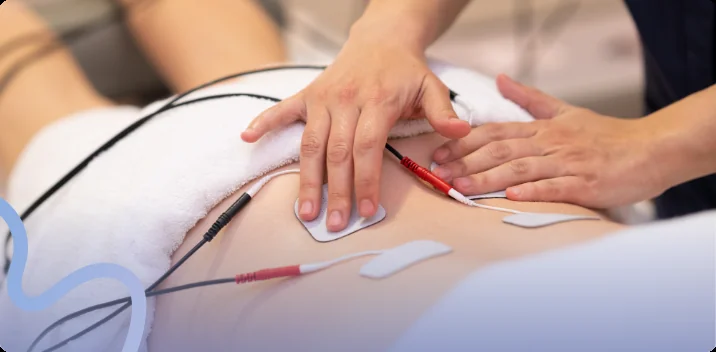
E-stim therapy uses controlled electrical impulses delivered through electrodes placed on the skin. These impulses help activate targeted muscles and the nerves connected to them. In a rehabilitation setting, that can support a stronger, more coordinated muscle response during movement.
This approach is often considered when a muscle needs help recovering three key functions. It may need to contract with better force, respond with better timing, and contribute without staying overly tense. Those changes can influence daily tasks like climbing stairs, returning to exercise, sitting comfortably at a desk, or getting through a workday with more ease.
E-stim may also help support circulation in the area and ease the protective tightness that can follow an injury. In some cases, it is used during a phase when exercise alone is not producing a clear enough muscular response.
At ProWellness, e-stim therapy is part of a broader set of non-invasive pain control treatments. Depending on the patient's presentation, it may be used alongside chiropractic care, massage therapy, ultrasound therapy, dry needling, or shockwave therapy.
Signs Recovery Still Needs More Support
For many people, the clearest sign is not sharp pain but a sense that movement still does not feel right.
Weakness That Shows Up During Normal Activity
A recovering muscle may feel fine at rest and still underperform once movement begins. That may show up when pushing off during a walk, holding posture at a desk, lifting overhead, or moving through a workout.
Tension That Keeps Returning
Protective tightness is common after injury. When it keeps returning, it can limit motion and change the way nearby muscles behave. That can leave the region feeling stiff or overworked by the end of the day.
Coordination That Still Feels Off
Muscles are supposed to turn on and ease off in a smooth sequence. After injury, that timing can become less precise. The result may feel like shakiness, hesitation, or reduced control during simple tasks.
Why Local Access Helps People Stay Consistent
Consistency is a big part of muscle recovery. A plan works better when people can actually follow through with it, reassess their progress, and make small adjustments as the body changes.
ProWellness Family Chiropractic is located at 644 Clark Drive, Lincolnton, North Carolina 28092. For patients coming from central Lincolnton, the office is in a practical corridor near other medical destinations, including Atrium Health Lincoln on McAlister Road. It is also accessible for people using US-321 and the NC-27 route through town. That kind of convenience can make it easier to stay engaged with care when recovery needs more than a single visit.
At ProWellness, our approach centers on personalized care, a family-focused experience, and conservative support for pain and mobility concerns. It is a good fit for people who want clear guidance and a more direct conversation about what their body needs right now.
A More Practical Way to Evaluate Progress
A productive recovery conversation usually begins with how the body is functioning now. Which movements still feel restricted? When does the muscle start to tire out? Does the area tighten after sitting, during activity, or later in the day? And just as important, does movement feel steady again, or is there still some hesitation?
That kind of review gives the visit more direction than a simple timeline. It helps clarify how the muscle is performing, how the body is adapting around it, and whether added support could help restore more consistent movement.
When Muscle Recovery Needs a More Structured Plan
A muscle that still feels weak, tense, or slow to respond often needs more than time on its own. Even when the initial pain has settled, poor activation, reduced endurance, and uneven movement can continue to affect daily function. That is where a more focused recovery strategy becomes useful.
E-stim therapy in Lincolnton, NC, can be part of that process by helping re-engage muscle activity, support better contraction, and improve how the area contributes during movement. In the right setting, it can also help clarify whether the issue is tied to lingering inhibition, protective tension, or reduced coordination after injury.
When recovery still feels incomplete, the next step should bring more clarity, not more guesswork. If you want a more practical plan for rebuilding strength and function, schedule an appointment with ProWellness Family Chiropractic.
Frequently Asked Questions
What is e-stim therapy?
E-stim therapy uses controlled electrical impulses delivered through electrodes placed on the skin. The impulses activate targeted muscles and the nerves connected to them, supporting a stronger and more coordinated muscle response during movement.
How does e-stim help muscle recovery after an injury?
After injury, a muscle can stay guarded, tire quickly, or respond with poor timing even once pain settles. E-stim helps re-engage that muscle activity so the area can contract with better force, respond on time, and contribute without staying overly tense.
What signs suggest a muscle still needs support?
Watch for weakness that shows up during normal activity, protective tightness that keeps returning, and coordination that feels off, such as shakiness or hesitation during simple tasks. Those patterns often persist after the initial pain has faded.
Is e-stim therapy used on its own?
It is usually part of a broader plan. Depending on how your recovery is progressing, e-stim may be used alongside chiropractic care, massage therapy, ultrasound therapy, dry needling, or shockwave therapy.
When is e-stim added to a recovery plan?
It is often introduced when the muscle is no longer acutely injured but still is not contributing normally during walking, lifting, or exercise, or when exercise alone is not producing a clear enough muscular response.
Ready to take the next step?
Talk with the ProWellness Family Chiropractic team about a E-Stim Therapy plan built around your body and your goals.