Knee pain can turn basic movement into a daily calculation. If you are looking for knee pain relief, the goal is usually simple: walk with confidence again, without having to plan your day around joint discomfort or worry about that sharp sensation with every step.
This problem tends to linger because it is more than irritated tissue. Load, joint mechanics, and pain signaling can reinforce each other, especially when you start compensating without realizing it. The most effective plans focus on calming the cycle, then rebuilding tolerance so your knee can handle real life again.
Why Knee Pain Becomes Hard to Ignore
The knee is a complex joint where the thighbone meets the shinbone, held together by ligaments, cushioned by cartilage, and moved by muscles and tendons. When it gets overloaded or irritated, the knee can feel tight, hot, or like it is bruised.
Many people try to push through. Then the nervous system adapts. When pain stays present, the nervous system stays more alert. That increases muscle guarding and changes how you load your knee. You might shorten your stride, avoid bending fully, or shift weight to favor the other leg.
Those changes create a feedback cycle in which irritation drives compensation, compensation changes mechanics, and mechanics keep stressing the same spot. You can also see why rest alone is not always enough. A weekend off may calm symptoms, but the first long walk, commute, or workout brings it back.
Does Shockwave Therapy Help Stubborn Knee Pain?
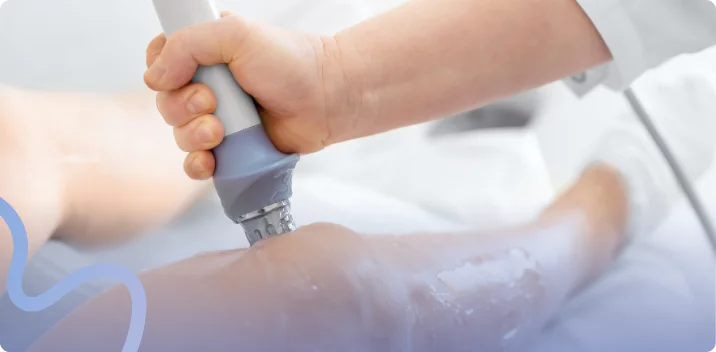
Shockwave therapy is a non-invasive option that uses acoustic waves delivered to the painful area to activate the body's natural healing processes. ProWellness Family Chiropractic uses specialized equipment to target pain points precisely, with the aim of supporting tissue repair and reducing inflammation.
In knee pain, the reason behind the discomfort matters. Joint pain often lingers because the tissue is not tolerating load well. You need a signal that supports repair, plus a plan that restores better mechanics.
The Science Behind Shockwave for Knee Pain Relief
Shockwave is sometimes framed as a quick, one-and-done answer. In reality, clinical reviews describe it as a safe, non-invasive therapy that tends to work best as part of a structured plan.
Here is what matters most:
It targets the local stress zone. Shockwave is applied where the joint and surrounding tissue are irritated, with the goal of stimulating a healing response in the area that has been stuck.
It supports circulation and repair signals. Research on shockwave mechanisms points to increased blood flow and tissue regeneration responses in treated tissue.
It can reduce pain sensitivity over time. When a region stays irritated, the brain can treat it as high-risk and amplify signals. Calming that response helps you move more normally, which is part of long-term change.
This is also why it is not only about the knee. Your hip alignment, quad and hamstring strength, ankle motion, and walking pattern all influence how much strain hits the knee joint.
A Practical Progress Framework for Knee Pain
Progress with knee pain is usually gradual. Many patients notice functional improvements first, rather than one dramatic change.
Phase 1: Establish Your Baseline
Your provider maps out what triggers symptoms, what relieves them, and how your knee behaves during basic movement. The goal is clarity: what is driving overload, and what needs to change first.
Phase 2: Early Changes You Can Measure
Early progress often looks like less sharp discomfort during the first steps in the morning, fewer flare-ups after long periods of standing or walking, and smoother motion when climbing stairs.
You may still have sensitive days. That does not mean it is not working. It often means the tissue is still rebuilding tolerance. Some people notice temporary soreness after a session, especially if the area is very sensitive at baseline. This is usually short-lived and tends to ease within a few days.
Phase 3: Building Load Tolerance
This is where the condition often starts to feel less persistent. If progress is on track, you may notice you can walk longer before symptoms show up, the knee settles faster after activity, and you move more naturally on stairs or uneven surfaces.
Many care plans use a short series of sessions rather than a single visit. The exact number and spacing vary based on your symptoms, tolerance, and how your knee responds over time.
What Helps Results Hold Between Visits
Shockwave can be a strong tool, but your daily decisions still matter. Practical supports include:
Avoiding sudden spikes in steps or running volume.
Using supportive bracing for longer standing days.
Gentle range-of-motion exercises that do not provoke sharp pain.
Simple strength work that improves how your knee handles load.
The goal is not to overprotect the knee. It is to build capacity without re-irritating the same tissue day after day. If arthritis is part of your picture, managing load this way matters even more.
What to Expect During a Visit
A good experience should feel organized and clear. You will start with a focused review of your symptom timeline, what makes the pain better or worse, and how your knee responds during everyday movements. Your provider may look at how you walk, how your knee bends, and whether tightness in the muscles or changes in joint alignment are adding extra strain.
If shockwave therapy is part of your plan, the session itself is straightforward and non-invasive, with minimal downtime. You should leave with a practical next-step plan, including simple guidance to reduce flare-ups, rebuild load tolerance, and return to walking more comfortably.
Conclusion
Knee pain can feel personal because it interrupts basic movement. When every walk becomes a calculation, your body starts to compensate, and the cycle gets louder.
Shockwave therapy may help reduce pain sensitivity and support healthier tissue remodeling, especially when it is paired with guidance that improves how your knee handles load. The sports medicine team at ProWellness Family Chiropractic in Lincolnton offers focused evaluations and plans that fit your schedule. Call (704) 735-9668 or schedule an appointment to get clear on what is driving your symptoms and how to move forward.
Frequently Asked Questions
How many shockwave sessions does knee pain usually take?
Most plans use a short series of sessions spaced across several weeks rather than a single visit. The exact number depends on how long the tissue has been irritated and how your knee responds. Your provider sets expectations at the first evaluation.
Does shockwave therapy hurt?
You will feel a rhythmic pulsing at the treatment site, and sensitive areas can feel intense for a few moments. Intensity is adjusted to your tolerance. Some people have mild soreness afterward that typically eases within a few days.
How soon will I notice results?
Many people notice functional changes first, such as easier stairs or fewer flare-ups after activity, within the first few sessions. Deeper tissue changes build gradually over the full series and the weeks that follow.
Is shockwave therapy safe?
Published reviews describe shockwave as a safe, non-invasive option for musculoskeletal conditions when applied by trained providers. Side effects are usually limited to temporary soreness or redness at the site.
Can I stay active during shockwave treatment?
Usually yes, with guardrails. Your provider will help you keep moving while avoiding the specific loads that re-irritate the tissue, then build activity back as your knee tolerates more.
Ready to take the next step?
Talk with the ProWellness Family Chiropractic team about a Shockwave Therapy plan built around your body and your goals.