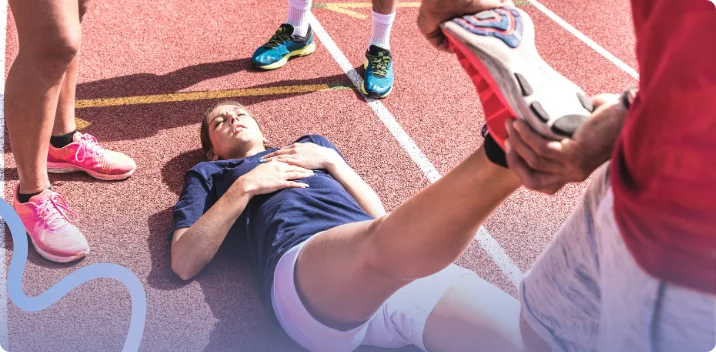
Your shoulder may start aching after a weekend run before you ever connect it to a sports injury or think about how your body mechanics could be working against you. You rest it, apply ice, and tell yourself it will pass in a day or two.
Then the same sharp pain flares up during your next workout, while climbing stairs, or even when reaching for something overhead, and it gets harder to dismiss. Those early warning signs are often your first real opportunity to protect your joints, muscles, and connective tissue before minor discomfort becomes a lasting injury that keeps you off the field or out of the gym.
Understanding what is happening inside your body and what puts you at greater risk helps you act faster and keep your strength and movement reliable for sport, work, and daily life.
What Is a Sports Injury?
Sports injuries happen when the body is pushed beyond what its tissues can absorb at that moment. That can mean a sudden traumatic event like a fall or collision, or it can mean a slow buildup of stress from repetitive movement, poor alignment, or overtraining. Either way, the result is damage to muscles, tendons, ligaments, joints, or nerves that disrupts normal function.
Common examples include sprains, strains, rotator cuff tears, knee ligament damage, shin splints, tennis elbow, and stress fractures. Each of these can affect your ability to train, compete, and move through daily life without pain or limitation.
The First Symptoms You Should Not Push Through
Early sports injury symptoms are often brushed off as normal soreness. Pay attention if you notice:
Sharp or aching pain that gets worse with movement or exercise rather than better as you warm up.
Swelling, bruising, or warmth around a joint or muscle group that develops after activity.
Stiffness or a noticeable loss of your normal range of motion in a joint.
Weakness or instability in the affected area, especially when bearing weight or lifting.
Numbness, tingling, or burning that suggests nerve involvement alongside the structural injury.
Lingering soreness that does not improve with a day or two of rest and is there again at your next session.
When these signs show up consistently, it is time to have the injury evaluated. Early intervention is almost always simpler and more effective than waiting until pain forces you to stop completely.
What Raises Your Risk of a Sports Injury?
Most sports injuries develop when several risk factors stack up at once: repetitive movement without enough recovery, poor alignment, previous injuries, sudden increases in training load, and lower overall conditioning. They rarely come out of nowhere. Injuries usually build when these factors combine to place more load on tissues than they can handle over time.
Overuse and Repetitive Movement Patterns
Performing the same motion repeatedly without adequate recovery is one of the most common paths to injury. Runners, lifters, tennis players, and CrossFit athletes are all susceptible. When muscles and tendons are asked to do the same thing too often without rest, small damage accumulates faster than the body can repair it.
Poor Alignment and Body Mechanics
When your spine, pelvis, or joints are out of alignment, the load of movement shifts onto structures that were not designed to carry it. Over time this creates uneven wear, compensation patterns, and soft tissue strain. Misalignment often develops gradually and may not produce noticeable symptoms until an injury occurs.
Previous Injuries and Scar Tissue
An old ankle sprain, a past shoulder strain, or even a minor fall that seemed to resolve on its own can leave behind subtle changes in how you move. Scar tissue, joint instability, and compensation habits from previous injuries all raise the risk of new damage in the same area or elsewhere in the kinetic chain.
Training Errors and Sudden Increases in Load
Ramping up volume or intensity too quickly is a classic setup for injury. When the body does not have enough time to adapt to new demands, tendons and bones are especially vulnerable. Skipping warm-up, neglecting mobility work, and training through fatigue also contribute.
Age, Body Weight, and Overall Conditioning
As the body ages, recovery slows and tissues lose some of their elasticity and tolerance for repeated stress. Higher body weight increases the load on joints during impact activities. Lower baseline fitness going into a demanding training cycle also raises injury risk significantly.
What To Do When Early Symptoms Appear
When pain, stiffness, or weakness keeps returning after activity, small changes can reduce the risk of a bigger setback. Identify which movements or loads trigger the symptoms and modify them temporarily rather than stopping altogether. Focus on warming up properly, addressing mobility limitations, and avoiding the habit of training through sharp pain.
At ProWellness Family Chiropractic, care for sports injuries focuses on understanding your full-body mechanics, not only the site of pain. Our team takes a personalized, non-surgical approach that identifies what is actually driving the injury, whether that is a misalignment, soft tissue strain, or joint dysfunction, and builds a plan around full recovery and long-term performance.
Your care plan may include chiropractic adjustments to restore alignment, soft tissue therapy to reduce muscle tension and support joint mobility, Class IV laser therapy to calm inflammation and encourage tissue repair, and sports recovery treatments like shockwave therapy and dry needling when your injury calls for them, along with coaching on training habits that reduce the risk of reinjury. Whether you are a competitive athlete or someone who simply wants to stay active, we will meet you where you are and help you get back to doing what you enjoy.
Choosing Your Next Step
If you recognize two or more of these warning signs in your own body, do not chalk them up to normal athletic wear or assume they will resolve on their own with enough ice and rest. Your ability to move well, compete, and stay active depends on your joints and tissues staying healthy over the long term.
The earlier you address a sports injury, the better your chances of avoiding the kind of chronic damage that limits how you use your body for years to come.
At ProWellness Family Chiropractic in Lincolnton, North Carolina, our team is ready to help you understand your injury, calm your symptoms, and protect your performance over time. We care for active families across Lincoln County and the surrounding communities, and we build every care plan around helping you move with confidence and stay in the game.
Frequently Asked Questions
How do I know if my pain is a sports injury or normal soreness?
Normal soreness eases as you warm up and fades within a day or two. A sports injury tends to do the opposite: the pain sharpens with movement, returns at every session, or comes with swelling, stiffness, weakness, or numbness. If the same spot keeps flaring up after activity, treat it as an injury rather than soreness.
When should I have a sports injury evaluated?
Have an injury evaluated when symptoms keep returning after a day or two of rest, when swelling or bruising develops around a joint, or when you notice weakness, instability, numbness, or a loss of your normal range of motion. Early evaluation is almost always simpler and more effective than waiting until pain forces you to stop.
Can I keep training with a minor sports injury?
Sometimes, with adjustments. Identify the movements or loads that trigger your symptoms and modify them temporarily instead of stopping altogether. Warm up properly, work on mobility limitations, and never push through sharp pain. If symptoms persist or worsen despite these changes, it is time to have the injury looked at.
How does chiropractic care help with sports injuries?
Chiropractic care looks at your full-body mechanics, not just the painful spot. A plan may combine adjustments to restore alignment, soft tissue therapy for muscle tension and joint mobility, Class IV laser therapy to calm inflammation, and coaching on training habits, all without surgery or medication as the starting point.
How can I lower my risk of a sports injury?
Build training load gradually, allow real recovery between repetitive sessions, warm up before activity, and address mobility limitations before they force compensation. Old injuries deserve extra attention, since scar tissue and altered movement patterns raise the risk of reinjury. Staying conditioned year-round also protects joints and tendons.
Ready to take the next step?
Talk with the ProWellness Family Chiropractic team about a Sports Injuries Care plan built around your body and your goals.