Spinal decompression therapy may be worth considering if you have been living with persistent back pain, neck pain, or radiating discomfort into the arms or legs that has not responded well to rest or other conservative treatments. The real question is often not just whether you are in pain, but whether that pain has started shaping how you sit, sleep, work, or move through your daily routine. ProWellness Family Chiropractic offers spinal decompression therapy as a focused, non-surgical approach for patients in Lincolnton, NC whose symptoms point to disc-related dysfunction as a primary contributor to their discomfort.
What Spinal Decompression Therapy Is and How It Works
Spinal decompression therapy uses a motorized traction table to gently stretch the spine in a controlled and precise way. This controlled stretching creates a negative pressure within the affected spinal segments, which can allow herniated or bulging disc material to retract and reduce the pressure it is placing on nearby nerves. The process also promotes the movement of oxygen, water, and nutrients into the disc, supporting the biological conditions necessary for healing in tissue that otherwise receives very limited circulation.
Why Disc Injuries Respond Poorly to Rest Alone
Spinal discs are avascular structures, meaning they rely on movement and mechanical loading to draw in the nutrients they need for repair rather than receiving a direct blood supply. When a disc is injured or degenerated, this nutrient exchange becomes less efficient, and the healing process can stall without targeted intervention. Rest may reduce the immediate mechanical aggravation of a disc injury, but it does not create the specific pressure changes needed to support disc rehydration and retraction of displaced tissue.
This is why many patients find that their symptoms return as soon as they resume normal activity following a period of rest. The underlying disc dysfunction has not been meaningfully addressed, and the mechanical environment of the spine has not changed in a way that supports genuine recovery.
How Nerve Compression Contributes to Pain and Dysfunction
When a disc herniates or bulges, the displaced material can press against nerve roots exiting the spinal column and generate pain, numbness, tingling, or weakness that radiates into the arms or legs depending on the level of the spine affected. Lumbar disc issues frequently produce symptoms that travel into the buttocks, thighs, and lower legs, while cervical disc problems often cause radiating discomfort into the shoulders, arms, and hands.
These referred symptoms can be as limiting as the back or neck pain itself, and in some cases they are the primary complaint that brings patients into care. Spinal decompression therapy addresses the source of nerve compression directly by reducing the pressure that is allowing disc material to encroach on the surrounding neural structures.

Conditions That Often Respond Well to Spinal Decompression
Spinal decompression therapy is most appropriate for patients whose pain has a disc-related mechanical cause. At ProWellness Family Chiropractic, this treatment may be recommended for patients dealing with herniated discs, bulging discs, degenerative disc disease, sciatica, posterior facet syndrome, and radiculopathy affecting the upper or lower extremities. Patients who have experienced recurring flare-ups of the same spinal pain and those who have not achieved lasting relief through medication, stretching, or general chiropractic adjustments alone are often good candidates for a more targeted decompression approach.
Recognizing When Your Symptoms May Indicate Disc Involvement
A few patterns often suggest that disc dysfunction may be contributing to spinal pain. Symptoms that worsen with prolonged sitting, bending forward, or bearing down, and that improve temporarily with lying down or changing positions, are commonly associated with disc-related pressure. Pain or neurological symptoms that radiate from the spine into the extremities in a consistent pattern also suggest nerve root involvement that may benefit from decompression.
Chronic back pain that keeps returning despite rest deserves the same attention. If any of these patterns are present, a thorough clinical evaluation is the appropriate next step before developing a treatment plan.
What to Expect From Spinal Decompression Care
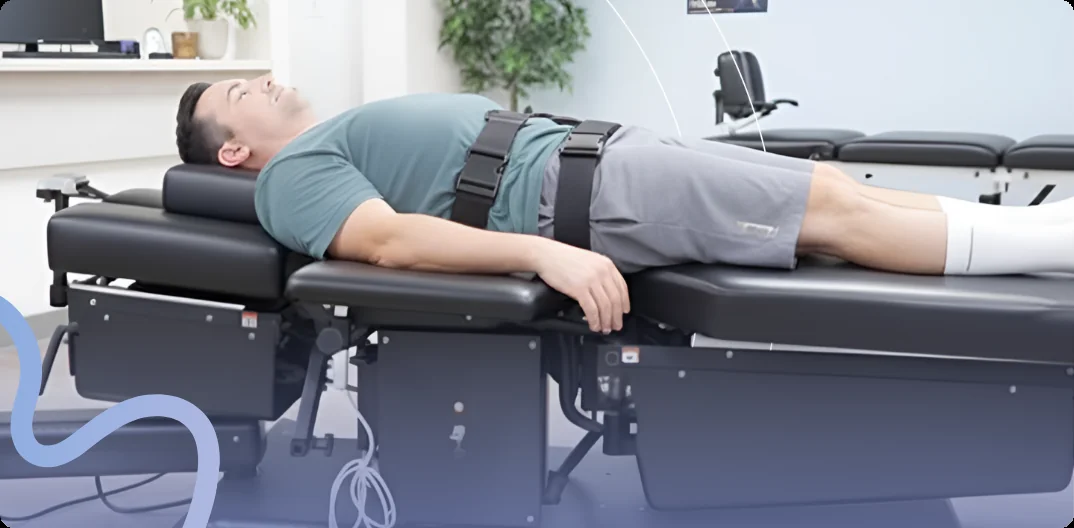
Care begins with a comprehensive evaluation of your symptoms, movement patterns, and relevant imaging findings so that your provider can determine whether spinal decompression therapy is an appropriate match for your presentation. Patients lie on the decompression table fully clothed while a harness system applies controlled traction to the targeted spinal region. Sessions are generally comfortable and are designed to allow the spine to respond to the decompression forces gradually and without causing additional irritation.
Building a Consistent Treatment Plan
Most patients complete a series of sessions over several weeks, as the structural changes associated with disc recovery develop progressively rather than immediately. Consistency is an important factor in achieving a meaningful outcome because each session builds on the cumulative effect of the previous ones. Your provider will track your progress throughout the course of treatment, adjust the plan based on how your symptoms are responding, and coordinate decompression with the chiropractic care our Lincolnton team provides when your presentation calls for a broader approach.
Taking the Next Step With ProWellness Family Chiropractic
Spinal pain that is affecting your movement, sleep, and ability to stay active deserves a careful clinical evaluation rather than continued management through rest and pain relief alone. If disc-related dysfunction is contributing to your symptoms, spinal decompression therapy offers a targeted and non-surgical path toward genuine recovery. At ProWellness Family Chiropractic in Lincolnton, North Carolina, we care for patients across Lincoln County and the surrounding communities. We invite you to contact our office to schedule an evaluation and begin a clearer conversation about what may be driving your pain and which type of care is most appropriate for your condition.
Frequently Asked Questions
What conditions can spinal decompression therapy help with?
Spinal decompression is most appropriate when pain has a disc-related mechanical cause. That includes herniated discs, bulging discs, degenerative disc disease, sciatica, posterior facet syndrome, and radiculopathy that produces radiating symptoms into the arms or legs.
Does spinal decompression therapy hurt?
Sessions are generally comfortable. You lie on the decompression table fully clothed while a harness system applies controlled traction to the targeted region of the spine. The stretching is gradual and designed to avoid creating additional irritation.
How many spinal decompression sessions will I need?
Most patients complete a series of sessions over several weeks because the structural changes associated with disc recovery develop progressively rather than immediately. Your provider tracks your progress throughout and adjusts the plan based on how your symptoms respond.
Why is rest alone often not enough for disc-related pain?
Spinal discs have very limited circulation and rely on movement and pressure changes to draw in nutrients. Rest can calm a flare-up, but it does not create the pressure changes that support disc rehydration, which is why symptoms often return with normal activity.
How do I know if my back pain involves a disc?
Common clues include pain that worsens with prolonged sitting, bending forward, or bearing down, improves temporarily when lying down, or radiates from the spine into the arms or legs in a consistent pattern. A clinical evaluation is the right way to confirm what is driving it.
Ready to take the next step?
Talk with the ProWellness Family Chiropractic team about a Spinal Decompression plan built around your body and your goals.